As we face the dismantling of a long term relationship, Paul Featherstone, Procurement Director of Sugarich, shares his thoughts on the importance of not undoing 40 years of exemplary standards of feed safety.

Paul Featherstone
Procurement Director
Sugarich
The semantics of a relationship
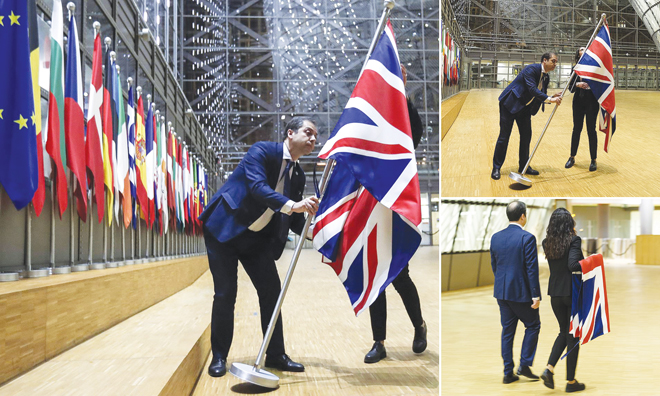
Brexit may have severed the UK’s tie with the EU, however, the UK is still a part of Europe, and without a doubt, both would like to see each other as trading partners. If we are to make that relationship as easy and seamless as possible, in my opinion, we should strive to avoid significant amounts of regulatory divergence from the start; and better still at the finish.
As a collective of collaborating countries, we clearly have the same objective: that food must be safe. Therefore, as a result, feed must also be safe for our livestock. It is incumbent upon us all, to ensure as European trading countries and partners, we maintain vigilance and awareness of what our European trading partners are doing legislatively, and with best practice guidance. These aspects are particularly important if we want to protect our trading relationship.
Seamless transition
Our products must be irreproachable, founded on exemplary levels of safe practice to enable seamless trading between ourselves. If one of the European community countries can identify best practice, then let’s share the intelligence for the common good. It keeps the standards high and consistent.
Regardless of the different perceptions of the EU, there is an argument to say that we worked better together on feed safety standards. The parting process is far from over, and now the hard work takes place to ensure the future relationship is maintained so that feed (and food) safety isn’t compromised.
We need to maintain a relatively harmonised process. I would like to think that there’s no constructive outcome in discarding elements of feed and food safety that would negatively impact our respective standards. We must wonder what the landscape is going to look like in 12 months when all of our connections are severed. Do we know how long it could take to negotiate a trading agreement? It took Canada eight years to finalise their CETA (Comprehensive Economic and Trade Agreement) with the EU, coming into force in 2017; yet all member states still have not signed it three years later.
The UK feed and agriculture sectors are still carrying on with business as usual. Without a degree of assurity on trade deal finalisation, farmers aren’t sure how steer their businesses. Being faced with yet another cliff edge may cause more confusion and uncertainty. We need to apply thought to future planning because this journey isn’t over.
What risks do we entertain by not working together?
There are risks posed by not maintaining hitherto effective and workable standards of feed safety. This is where we are compelled to revisit common threats born in the past, but very much an ongoing concern of the present, and if unchecked, dire problems for the future may arise.
The food and feed industries in the UK do not easily forget the foot and mouth epidemic in 2001, which was caused by swill feeding ; since then it has been illegal. Should there be a change in practice towards using food waste for feed, similar disease risks loom on the horizon. The foremost concern being the ‘cannibalism effect’ of TSEs (transmissible spongiform encephalopathies) and their transferable harm to the human food chain. And it’s not just about the biological cost, there is an economic factor to consider as well.
Imagine that swill feeding is reintroduced as an option. It’s not unreasonable to guess that a newly designed swill feed operator programme would be required, and its establishment means that yet more cost would be incurred. There may also be additional requirements to the streaming of waste, with new bins, transport, and further segregation methods involved at specialised plants – all of which may not incur tax breaks. Therefore, the consumer may well carry the financial burden as a food waste charge.
While the swill option may work for other countries, to apply the same here, would demand rigorous and scrupulous regulations and the application of good practice regarding treatment of swill. Furthermore, the enforcement of the practice must be done with zero tolerance for rule breaking, as the potential consequences of doing so are very serious. Let’s not forget achieving user buy-in, because the spectre of a disease outbreak is always hovering over the farming and agriculture sectors. They are very damaging to these economies.
We must continue to be vigilant and diligent about standards
Having seen the challenges faced by Europe 30 years ago with disease outbreaks, which have been managed and for the most part, overcome, we wouldn’t want to regress to a crisis mode. In Indonesia and China for example, swine fever is rife. By August 2019, China’s pig population declined by a staggering 40 percent , around USD141 billion in loss. It has been said that the failure was not so much in a lack of regulation, but a shortcoming in governance.
African swine fever has swept across Asia, and is now in Europe - detected in nine EU countries according to EFSA (European Food Safety Authority). EFSA is also currently tackling the issue in relation to non-commercial domestic farming practices in rural areas across EU countries, to tighten control over the eradication and spread of the disease. Czechia has been a recent success in this regard, and we anticipate further success stories of similar ilk.
In the recent exposé about chlorinated chicken, it raises questions about the approach to this practice; is it good or bad? In the EU, the chlorination of chicken is banned. It works on the premise that we be should be creating safe food that doesn’t require chlorination, and we manage contaminants, like salmonella, properly from the source. Other camps may feel that it doesn’t matter as long as the symptom can be treated effectively, and we need not worry about the cause. But if the rumours are true, and future UK trade deals outside of Europe will include chlorinated chicken on the menu , then hopefully they are processed without lapses in the early stages of the production chain. For example, keeping livestock in as sanitary, healthy, and humane environments as possible. Of course, this will only transpire if the UK abandons its hitherto strict (EU) practices and allows their importation.
No doubt the debate will continue. It just highlights however, that these are the types of decision-making that we must manage most carefully when safeguarding our secure handling of feed and food.
Now that we are in the growing grip of the zoonotic Covid-19, i.e. it can jump from animals to humans, what are the implications for our food chain? Questions abound as to the virus’ origins; was it the eating of exotic wild animals, or keeping them in close proximity to urbanised farmed ones, where the disease migrated from the ‘wild’ to the ‘farmed’? Such was one of the suspicions about the H5N1 avian flu. We must also consider that there’s scope for mutation, which might transform it into something as dangerous as the prion based diseases, like BSE was for example. Conversely it may mutate into a less harmful version of itself. It takes time, expertise and yes, collaboration to investigate and mitigate such risks in our own food and feed industries.
Conclusion
Cutting corners has consequences. Whether it’s the decimation of livestock or contamination risk to human health. More often than not, an undesirable slip in standards, if not correctly managed, turns into a crisis. New trading relationships between the UK and Europe must maintain that very high level of food and feed safety that we have enjoyed for the last couple of decades to avoid such crises from taking hold.
If we have been successfully controlling the transmission of enteric disease by working together, let’s continue to do that. Striving for the continued evolution in efficacy and efficiency in safety practice is a worthy cause. This will be the way that we maintain our role as ‘Europeans’ even though we are not in the EU. Doing anything else would be a step backward, and securing the future of feed safety is better done together, as a collaborative community.